


Weekly Music Spotlight: The Journey of Sovereign Entertainment and The Parlotones
Our First Powerzone Roadshow
Determined and full of hope, I rented a bus and invested in a sound system, and off we went on the very first Powerzone Roadshow. This proved to be an obstacle course—in 2003, South Africa had no support for a touring circuit, so we booked shows anywhere we could. We had to travel with our own sound system, a full backline, and everything else that was necessary to stage a show.
Of the ten shows we did on that first tour, only one venue had a sound system in place. There’s nothing like necessity to inspire you to learn fast and acquire new skills. In a developed market, a band has an entire team, consisting of Record Label, Publicist, Manager, Agent, Promoter, Publisher, and Tour Manager. Because we were navigating undeveloped markets, I had to assume all of those roles myself.
As in other fields, book learning takes you only so far. When I signed Perez and decided to manage them, I read as many books as I could find about artist management and marketing. But even though I could learn from basic concepts, the books were American and were written from the perspective of a well-developed industry. All the books advised against the 360-degree system we were implementing. Ask any music executive from the ’80s and ’90s, and they will tell you that all these functions should never be managed by a single company.
There is no greater teacher than experience, and having experience in every aspect of the music industry is a great asset. Because I had launched one of South Africa’s most successful internet companies, I had a very strong entrepreneurial spirit. Knowing how to build a brand was key. My strategy was simple: treat the band like any other startup company and apply the same principles and ideas. This was where we diverged sharply from traditional artist management and marketing. Building the brand behind the scenes was the driving force.
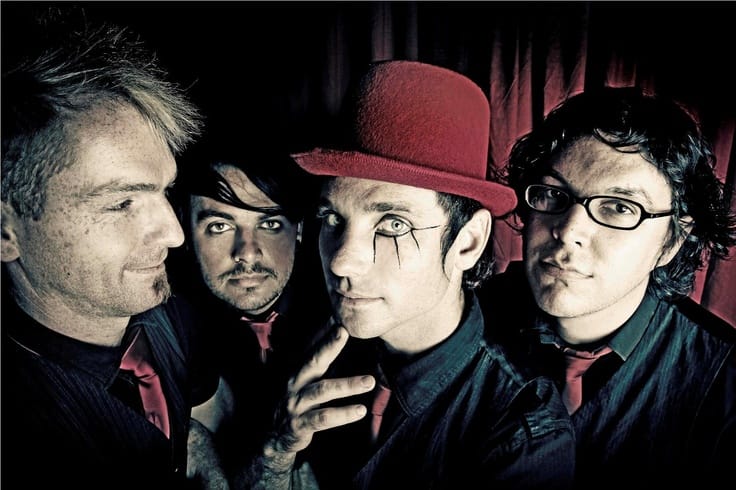
Our Powerzone Roadshow embarked with six brand-new bands: The Parlotones, Jimmy 12 Inch, Marlowe, The Finkelsteins, Even Flow, and Prime Circle. Optimistically, I calculated that six relatively unknown bands could sell the same number of tickets on a tour as one well-known band. I based this projection on the success that Perez had enjoyed the year before.
Blind Faith
The strangest thing about the early years was blind faith that we would succeed no matter how many times we had failed. Again and again, I told myself that I almost did it this time and would most definitely accomplish it the next.
At the outset, our only real income was from live performances, which was why we designed multiband tours. While building Perez, I had the financial backing of my IT company, so there was no real pressure to succeed. The major drawback was that I paid little attention to how much I was actually investing in the band; its growth was my only goal. If Perez had survived long enough, I could have recouped this investment in a few years; but that did not happen, and all the money was lost.
What I gained was invaluable experience, respect from the industry, and all the relationships I would need to do it all over again. Around this time, the internet bubble burst and the ride was over. My website, Pnet, was half owned by my corporate investors, and I wanted out. So I sold my shares, took a deep breath, and resolved to follow my passion.
There is a major difference between breaking bands with the benefit of unlimited funds and trying to survive within the music industry. When Perez broke up, the CEO of a rival company called to say that they were going to miss me, in a tone of sarcastic ridicule. He implied that I could not cut it in the music business and I would never be heard from again. At that time, his company had the majority market share of top South African rock bands. But in the end, he himself would vanish into obscurity.
Even though I was very unhappy with the outcome of my investment, I had no intention of giving up. Little did I know of the challenges I would soon face with the Powerzone Roadshow. In March 2003, bursting with possibilities, we set out to launch a new age in music. A year had gone by since I had sold Pnet, and cash flow was starting to dry up. But that didn’t matter because my road show would save the day and make everything all right, right? It was a simple equation: all we had to do was get 400 people per show over a ten-city tour, and we would make enough money to keep the lights on. Still better, we would stimulate enough publicity and awareness to propel all the bands to the next level.
Using the same time frame as for Perez, I put the plan in motion, but I overlooked one significant little fact: I no longer had all the money to inject during the same time period to achieve comparable results.
The opening show of the tour went pretty well, with 370 people attending. However, a slight dispute with the venue over the calculation formula left us a little poorer than expected. No problem! If we could get 450 people to show up the next night, all would be right with the world. Unfortunately, only 250 people attended, but our enthusiasm was not squelched. This only meant that we needed 650 people the following night, and that was perfectly within sight. Except that it did not happen. This is where things started to get a little stressful.
Reducing our Losses
What started out as fun, even euphoric, was interrupted by a rude awakening that shook me to reality when we suffered deep losses on the tour. By now, it was evident that our first Powerzone Roadshow was not going to make a profit. Sadly, our calculations had changed from adding up profits to assessing our losses. Our next two shows were disastrous in that our ticket sales did not even cover the bar tabs.
Because we had to economize on accommodations, we spent every night in hostels, all of which were pretty decent except for one—and that was downright frightening. The Old Gaol in Grahamstown was actually a converted jail that had been around since colonial days. It was established when the 1820 settlers and French Huguenots arrived in South Africa. In its courtyard was a gallows used to hang hardened criminals. The jail was surrounded by a high wall designed to keep prisoners inside, and we entered with some trepidation.
Our rooms were old, converted prison cells. Mine had been a solitary confinement cell. I’m not even sure if it had a window or a vent because it was pitch dark in there. I think this was for the best, because the less we saw, the easier it was to fall asleep. My door had to be kept open to allow a tiny bit of light to seep in.
While my prison buddies; a.k.a. colleagues, were bedding down for the night, I heard the clanging of heavy steel doors all around me, slamming with the Alcatraz-like din of cells locking down, just as in our favorite escape movies. It was eerie. Worse still was the stench of urine permeating the whole place. At least it makes for a story that you don’t forget even ten years after it happened.
In the morning we woke up very early—those of us who got any sleep at all—and walked out into the yard where so many men had been hanged, executed for crimes long forgotten. There was no time to linger and admire the facility in broad daylight, as we had to move on and get to the next town. I did not have to ask anybody twice to pack up and go.
We headed to Port Elizabeth for our next show, where I had hired a local promoter to secure the venue and do local publicity. As we arrived, I looked out the window and saw chains around the door. Even so, everything must have been all right; otherwise, the promoter would have avoided the meeting; but there he was, expecting our arrival.
I kept my positive stance but had to face the truth: the place had gone out of business. The sheriff had shut it down and repossessed the premises. But the promoter behaved like a victim who had only found out that very day and was there to help us make it right. He’d taken no responsibility to warn us that the venue had been closed down. If he’d really been doing his job, he would have found out well in advance of our arrival.
We couldn’t get past the chains. It was 5:00 in the afternoon, time to load in and sound-check, but we had no venue. Our six bands and crew members piled out of the bus with no show to play. It was time for action and not despair. The Finkelsteins, who were from Port Elizabeth, quickly offered some alternatives. We called around in haste and luckily found a hot spot that could accommodate all our bands.
The show fell on a Thursday night, a very popular night at this club. The only problem was the club owner, Mike. He worried that our entrance fees would keep out clientele who were not interested in bands, and he would therefore lose out on his regular turnover. Mike said we could use his club only if he achieved at least an average turnover at his bar that night.
As we found out later on, Mike’s average turnover was R6000.00 at the bar. But the cash-up he showed us was from a night when he had turned over R8000.00. He lied, saying that was from an average night, when it was actually his biggest night in recent months.
By this time I had already called the on-air DJ at 5FM in a panic, and she’d been pushing the venue change on her show for the past hour. We had no choice but to accept Mike’s demands in order to secure the deal: if he ended up short at the bar compared to what he said was his average Thursday night turnover, we would have to make up the difference with our ticket sales. “The show must go on!”—so we consented to this dubious bargain.
The night was actually a reasonable success, with well over 300 people in attendance. Not surprisingly, Mike proved to be a thieving lowlife. We did, in fact, reach the turnover of an average night—6000 rand—but because he’d lied and told us his record night was what he did on average, we did not make the inflated target of 8000 rand. Mike declared that we were 2000 rand short and had to pay this in. If he had been honest, we would not have had to pay anything in.
Up against a wall, I agreed, and as we were talking about bar turnover, I decided to get some value in return. Since we had to pay the bar tab, why not enjoy some provisions? So I announced to the band members, “Go mad, guys, we have 2K of booze we have to get through!”
Unfortunately, Mike, the resident lowlife, was smarter than I was. When he heard this, he closed the bar for the night and pocketed our money. His lie about average turnover didn’t come to light until years later when the club was taken over by one of his managers. Karma did pay him back four years later, as you will see, in a striking turn of fate.
* * *
That tour in 2003 was the first time that Neil’s mechanical skills proved indispensible. Calamity struck as we were crossing the mountain passes of the Garden Route. The breaks on our bus failed, and we were fortunate to avoid a catastrophe and escape with our lives.
The famous Garden Route stretches along the southeastern coast of South Africa from Heidelberg in the Western Cape to the Storms River in the Eastern Cape. This is a popular tourist route because of its lush vegetation, animal life, lagoons, lakes, hiking trails, nature preserves, picturesque towns, and year-round temperate climate. But we were too terrified to appreciate the breathtaking Outeniqua and Tsitsikamma Mountains on one side of the route and the Indian Ocean on the other side.
That’s when we discovered that there was nothing that the resourceful Neil Pauw couldn’t fix with a bass guitar string and a pair of pliers. Soon we were on our way again, nervous but resolute.
Just when things could not get any worse, a member of one of the bands had sticky fingers and stole most of the receipts we had earned on the tour. Not having forensic proof, we couldn’t blame anyone, much less search anyone. But we knew who it was, as this was not the first time he had stolen anything. The only comment anybody made about the theft came from a singer whose fellow band member (the culprit) just happened to be sleeping alone inside the bus around the time that the money went missing. In an amazing display of irony, this singer reprimanded me for having left the cash box unattended in a locked bus. The singer himself was a good guy, but I suppose the guilt of knowing that a member of his own band was responsible made him get defensive and lash out.
We returned from our tour with very little cash and a pile of bills. Regardless, the bands didn’t really mind because they’d had the time of their lives. But for me personally, the results were devastating. The tour dealt me a serious blow, and for a week I even contemplated returning to the corporate world and getting a job, doubting that what I was attempting to do was even possible. Fortunately, those crazy ruminations lasted only a few days.
To make up for my losses, I had to sell some precious items over the next few months, including my boat and my beloved BMW, which was my favorite thing in the world. My seven-seat speedboat was practically brand-new. I’d managed to use it for a total of seven hours, as indicated on its odometer. My gorgeous BMW was a 528i Sedan that I’d bought with my first major payout from the internet company I had started. Selling the BMW was a wrenching decision and a heartbreaking experience because that car represented a certain milestone I’d achieved in my life, and its sacrifice meant going backwards.
Watching my car being driven away by its new owner, I reminisced. Purchasing that car in 1999 was one of my favorite stories: I walked into the dealership wearing torn jeans and a Powerzone T-shirt, not at all resembling a potential client, and yet the saleslady treated me with respect and started on her sales pitch. Before she finished, I declared, “I want that one, in silver.” It was the quickest sale of her life.
One thing that stands out in my mind was her question, “If you want to drive a 5 Series at age 25, what are you going to drive when you’re 35?”
“Oh, I’m sure by the time I’m that age, it will be time for a 7 Series,” I answered her flippantly. But here I was now, four years later, definitely not on track for a 7, and no longer the proud owner of any BMW at all.
The final cherished item I had to sell was my top-of-the-line Caravan. It’s South Africa’s version of an RV, except that it has to be towed. The Caravan was just as difficult to let go as the BMW. It had accompanied us to all the major festivals during the Powerzone years, and it represented a major part of our lives. I speak for myself, as my wife was happy to see it go. She’d never been the camping type, and now she’d be assured of a hotel room the next time we needed to go to a festival.
Episoda
A week later, I dusted myself off and got to work on the next road show. Six months had gone by since our first tour, and even though we’d lost money, some of my artists were gaining popularity and airplay on the radio. Although our tour was a do-it-yourself project, we had managed to establish a national circuit. The Finkelsteins, The Parlotones, and Marlowe could not wait to do it again, and we had since signed Prime Circle, who joined us on tour.
Our second tour didn’t bring in much revenue, but we turned things around and made a small profit. This time we were headed in the right direction: it was becoming evident that our goal was achievable. 2003 was a year of great education with plenty of ups and downs, but we were getting our first tangible results with The Finkelsteins dominating the youth market and becoming our first headline act. They were shortly followed by Prime Circle, who would later dominate the South African music scene, starting in 2004. Sovereign Entertainment strongly encouraged the buddy system; in the early days, Prime Circle supported The Finkelsteins, and later, The Parlotones supported Prime Circle.
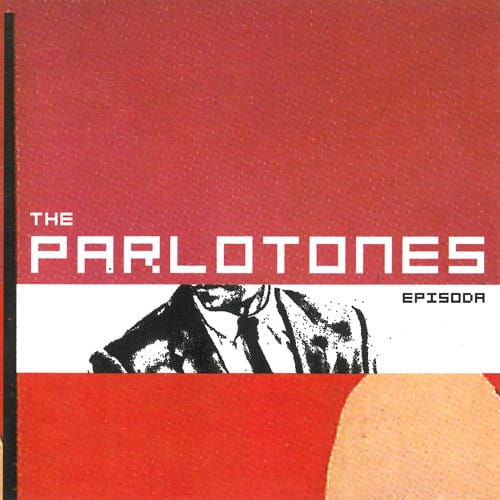
As is common with many young bands, in 2003 the Parlotones had a creative spurt and wrote twelve new songs. This could mean only one thing: they felt compelled to record an album, which they named Episoda. Bands are always so eager to record! Knowing it was important to get this exercise out of the way so we could focus on a more successful album in the future, I agreed they could record Episoda at a friend’s home studio.
We all enjoyed recording the album as a great piece of work, but there was clearly no commercial viability to the project. Nick Grubb, the program manager of 5FM, was very accommodating to our quest of trying to launch a new era of South African music. But as he and I sat together listening, he had the same reaction to every single track on the record: “Not suitable for radio.” Episoda’s song structures were very alternative and heavily influenced by the British scene, unpopular in the mainstream at the time. It was almost impossible for a South African band to get on the radio with a perfectly radio-structured song. To this day, Episoda has not sold much, considering the massive and dedicated fan base that The Parlotones have built up over the years.
Although it wasn’t a hit, Episoda was nevertheless a significant chapter in the development of the band and what had to be done to enter the commercial music space. The irony was that the minute this album was complete, some of the band’s greatest songs ever were written: “Beautiful,” “Tiny,” “Pretend,” “Colourful,” and “Overexposed.” This would not be the last brick wall we would face, but it was time to soldier on, and so we did.


